
Thursday, October 22, 2026


On Wednesday, May 6, a visit to a nearby native prairie confirmed what I had been told: the peak wildflower bloom this year is coming late.
That’s good news if you’re planning to attend this year’s Prairie Appreciation Day, scheduled for Saturday, May 9. This is the one day the public is invited to visit the 80-acre Thurston County Glacial Heritage Preserve, an area usually closed to public access.
The fun begins before you even enter it: The access road passes through a Weyerhaeuser tree nursery that is a good place to spot an uncommon bird, the vesper sparrow. (It’s supposed to favor native prairies, but for some reason it likes the tree nursery).
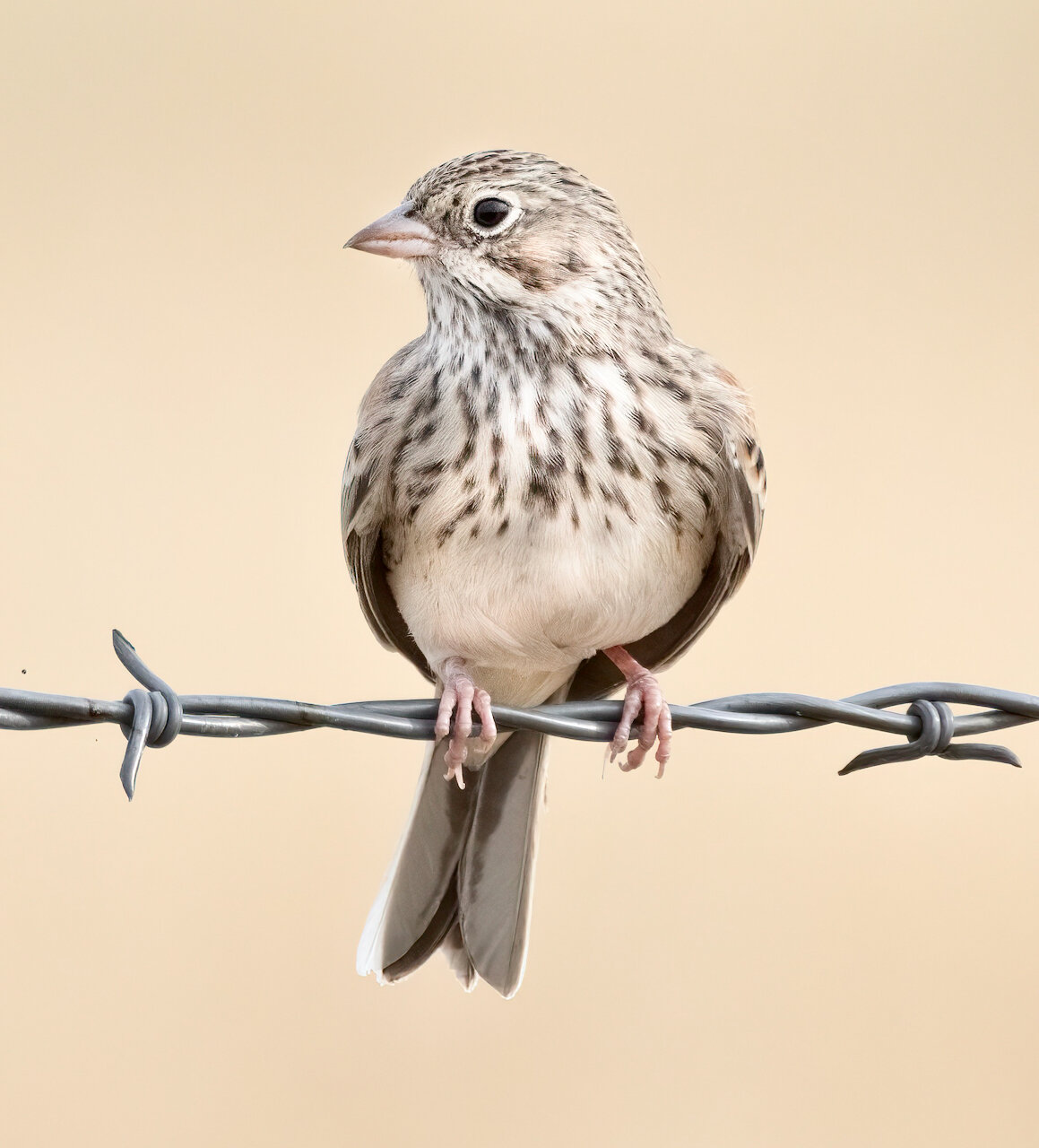
As you look at Liam’s photo, you may think it’s just another difficult-to-identify brown sparrow. But really, it’s not that challenging. It’s brown with fine streaks and a white belly. Like many sparrow species, both sexes look alike. They have white outer tail feathers that are readily visible as it flies off, and a white eye-ring, a combination that is unique to this species. The male sings from a prominent perch, and there could be several of these singers along that access road. So, using your Merlin app and binoculars, you may have added this species to your day list before even reaching the heritage preserve.

A vaguely similar bird of the open prairie is the Savannah sparrow. It is much more common than the vesper and behaves differently (and it has no white outer tail feathers). This bird is brown above and white below, with streaks of dark blackish-brown. It has a yellow stripe in front of and over its eye and the habit of flaring its head feathers giving a small crest appearance.
These birds feed on seeds they find on the open ground and will jump up and circle around before landing again. The males sing a high-pitch thin song that includes an insect-like trill, very different than any other sparrow you are likely to encounter in the open grassland.

The third sparrow you are likely to see in the open grassland is the white-crowned sparrow. It’s much larger than the two others and has a longer tail and a plain light-gray breast. But its most obvious identification feature is the obvious black and white striping on its head.
This sparrow is found throughout Thurston County in any open area, including lawns and back yards. Its song starts with two loud, long whistles followed by a jumble of short notes and often ending with a trill. Again, the Merlin app can help, but once you hear its song you will realize how familiar it is.
There are open prairies throughout southern Thurston County. To reach Glacial Heritage and other interesting prairies, go south on Interstate 5 to the Maytown exit. The freeway exit ramp leads onto Maytown Road and, by making no turns, you will drive west reaching the town of Littlerock. Continue straight and soon you reach a “T” intersection at Mima Road. If you turn right, the road takes you to the Mima Mounds Natural Area Preserve. If you turn left at the T, you will drive along small pieces of native prairie and in approximately 2 miles you can turn left onto the access road to the Glacial Heritage Preserve.
A knowledgeable bird columnist was wrong. He said the Grays Harbor high tides on last Sunday (May 3) would be a good time to experience the annual spring shorebird migration. So, following that writer’s recommendation, three of us drove the 60 miles from Olympia to Bottle Beach State Park.

The weather was perfect, bright warm sun and a slight breeze. And there were shorebirds, but not nearly as many as I expected. The dunlins and western sandpipers were in their colorful breeding plumage, and there were numerous semi-palmated plovers dashing here and there catching sandfleas on the high beach.

I was disappointed that we did not encounter the huge flocks of shorebirds I had hoped for. Fortunately, I was with two companions who were wise enough to simply enjoy the outing and remind me how much fun it is to watch these birds stand and hop on one leg, and then shift to the other leg, as shorebirds are apt to do.

Both the upcoming weather and wildflower forecast is good. So, whether we visit the prairies or venture over to Grays Harbor for another look at migrating shorebirds, it will be another great weekend to enjoy the spring, the birds, and the flowers.
George Walter is environmental program manager at the Nisqually Indian Tribe’s natural resources department; he also has a 45+ year interest in bird watching. He may be reached at george@theJOLTnews.com
Bird photos for this column are provided by Liam Hutcheson, an 18-year-old Olympia area birder and avid photographer.


Comments
No comments on this item Please log in to comment by clicking here